break the laws/break the chains: political reflections on Mike Brown and White Supremacy from Oakland CA
Posted: November 26, 2014 Filed under: Home Truths 16 Comments
To be free is to break the law
“Nobody in the world, nobody in history, has ever gotten their freedom by appealing to the moral sense of the people who were oppressing them.”
-assata shakur
I write to you from a humbled place. Striving to be a warrior for my people; looking and listening. This is an attempt to share some political reflections as a Black womyn in the struggle since I left the womb. The last two days Turtle Island (united states) has been on fire in solidarity with Mike Brown’s family and Ferguson, Missouri to protest the murder of Mike Brown by pig Darren Wilson, who continues to live freely with no charges filed against him. Mike Brown, like many of my brothers and sisters before me, was murdered for being a Black man in the White mans system. A system built out of the genocide of Black and Native folks. No justice will ever be served in their courts. This week in particular is a powerful week to be remembering and honoring native resistance, and Indigenous resistance all over this earth to white supremacy and state violence. Nothing has changed including the lies and bullshit holidays they try to feed us to distract us from these truths. We honor by continuing to resist.
My consciousness took a deep and important shift when Oscar grant was murdered nearly 6 years ago now at Fruitvale Bart Station on New Years of 2009. I begin building community here in Oakland to fight back against white supremacy shortly after. It is within this journey that certain political truths have been crystalized within me, which have helped root out reformism and liberalism, which serves to distract from the truth. There are many authoritarians within the spectrum of the left, who seek to manage and point out correct lines and such. Fuck them. That is not my purpose in these political reflections to gain ideological power over ‘the revolution’. That’s also not possible. The people will liberate themselves. But I do see too many of my own folks, (melinated, womyn, queer, combos of all) who fall into these liberal traps of seeking change through passive reformism and non violence. I see too many of my own folks who know the system is wrong or has to go in some kind of way, but aren’t sure what that is or are still too incarcerated within it, ideologically, to imagine what it would mean to truly break free and what it would take. We live in a world built out of white supremacy; manifested from the White mans vision, and implemented through deep violence. That is the only way the White man has won the world. Fanon said it concisely in The Wretched of the Earth,
“Colonialism is not a machine capable of thinking, a body endowed with reason. It is naked violence and only gives in when confronted with greater violence.”
We live within colonial capitalism. A psychotic exploitative system designed to continually rob and take to keep a ruling elite in power. This system was created through European conquest, which helped set puppet governments up all over the world, who will act in accordance with these capitalist laws of domination over the earth and its peoples. All laws that exist are designed to protect this system. Protect the white supremacist hierarchy at its foundation. Protect the stolen wealth through genocide. As a people we are confronted with two choices, to integrate into the system and therefore legitimize slavery or to destroy it, which means breaking their slaveholder laws.
This can be a scary step for some folks to take, but it is a necessary one to truly break free, and it begins within our own consciousness and spirits, which guide our actions. For most, the way this practically happens is through the process of struggle itself. Sure, most of us are politicized through our identities and lived experiences as powerful, creative beings, who have survived generations of trauma caused from colonization. But that doesn’t change the fact that we live in the White mans world and are manipulated through his institutions, such as skkkool, and have his media all around us. It messes up our mind. Materially and physically we are dependent on this system, because capitalism creates dependency. We all are integrated into it just through the need to survive. We have to work hard for crumbs just to afford the basic necessities of life. Its expensive to be poor in a system opposed to life and we are not free to leave it or to live differently according to their laws. That type of liberation will come through a larger decolonial struggle that has been in existence for over 500 years.
When we take to the streets. When we fight back in direct ways, in offensive ways, not just passive marches, boycotts or petitions, then something changes within us. Our spirits are awakened when we take back space, whether it be buildings, freeways, walls, parks, ect. Confidence is built through taking risks. And when confidence is built we can do it better and larger and deeper. We can start to imagine what it might be like to not live in fear of the backlash of the state. We can begin to imagine what it might be like to live without a state altogether. To be truly free and autonomous. To not just take back space for a few hours, but to really decolonize and live with the earth. All we need is each other and that bravery and so much can happen, but it’s hard to imagine without the practical experience. Without seeing your comrades beat down and/or kidnapped in the streets by the racist pigs you were out there protesting or when you see over a 1000 people in Oakland, CA take the 580 freeway twice, because why the fuck not. We are powerful and can do anything with the right experience and mindset, and some organization. Not revolutionary organizations or vanguard parties that seek to manage the people, but through being organized together and finding unity through struggle. Lets stop legitimizing the system and giving them power. All they have is their violence and their lack of feeling, which allows them to employ that violence in the most disturbing ways to enforce their laws. That’s real and scary, but we also have so much more. As a people we have a deep brilliance and creativity, and our own hearts and ancestral blood to guide us as we fight back. We stay protected. We would not have survived this long if we weren’t. Our ancestors want us alive.
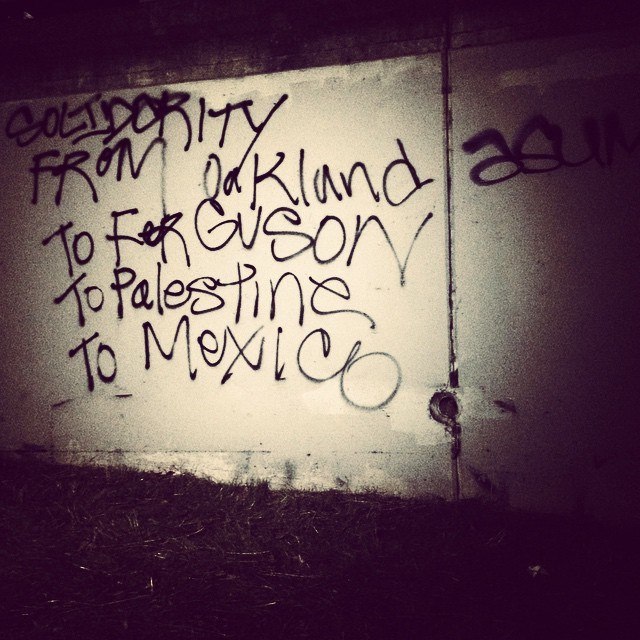
Black lives fight back
Monday and Tuesday night in Oakland was inspiring, because it is a reminder of the dignified rage that flows through our people. That rage is the source of our power and magic. A righteous destruction we must employ against our oppressors, as well as a creative power to imagine and build something new. This is the beauty of militant decolonial struggle. The ways it builds upon itself through time and space. Nothing is purely spontaneous when the people have been self-organizing for 100s of years. What is important to me is how we build upon that energy so it hits the pressure points of the system as well as uplift one another.
A chant I heard over and over again throughout the protests is ‘black lives matter’. The slogan seems to be a rallying cry for this movement of solidarity with Mike Brown against white supremacy. Historically slogans have been important reflections of politics to inspire the people. The Black Panther Party said ‘All power to the people’ (Black, Brown, Red, Yellow, Poor, Womyn, Queer). To me that slogan reflected a radical politic that claimed the source of political power comes from the people; not bourgeois political parties and the police thugs who protect their money and hustle. The Black Panther Party and Black Power movement was also a youth movement. Radical struggles have always sprung from the youth. If our struggles are not centering the visions and actions of the youth then our struggles will lead to nowhere. There are a lot of non-profits that engage with young Black and Brown people and even seek to talk about ‘social justice’ and ‘activism’ but this work often stifles the movement of the youth narrowing it into the fields of education and assimilation, rather into freedom fighters. Outkast said it best, ‘youth full of fire and got nowhere to go’. The non-profitization of parts of the bay area left seeks to take out the fire of the youth and militant struggle, but young people see through these contradictions too. Especially young Black and Brown youth, who know what its like to not have political and social power within this white supremacist system; who see through the contradictions of the amerikkkan dream denied to them. The youth of Oakland have always represented in the streets and I’m proud to struggle alongside them.
So when we claim Black lives matter, who are we really talking to? I don’t need to tell another Black or Brown brother and sister that our lives matter. We know that. We are committed to that. Because if we weren’t committed to it then how would we have been able to survive and continue to survive genocide all these years? Through valuing ourselves in a system that doesn’t value life at all, let alone Black and Native life. We are alienated and isolated, but we are also strong and build our communities up out of nothing, and still have enough energy to take to the streets and resist. Our lives matter so how do we fight back against a system of genocide? We do not need to plea with the slave masters to recognize our humanity. These politics and tactics have come up time and time again during social upheavals against white supremacy and state violence. I saw it during Oscar grant struggles when some folks were pushing police reform. I ask what would Harriet Tubman do? What would Nat Turner do? Certainly not ask the slave master for freedom. We take it. It’s time we start valuing each other enough to struggle for one another so that we may live for one another. We do not need to convince the slaveholding system of shit. But with the legalist and reformist strategies also comes a certain policing of militants by ‘activists’ in the streets. Unfortunately a lot of times this policing comes from more liberal or non-profitized folks of color, who want to keep things non-violent. For me as a Black womyn this policing takes away my agency to get turnt up in the streets, which I need to do, because that is healing too. Black people aren’t just victims of white supremacy, we also fight back and rage against the system too. Always. And it isn’t just White people or ‘outside agitators’ breaking stuff. These claims disempower our people.
On monday night during the march I got in between these womyn of color, who were attempting to snatch a bandanna off this white boys face, who had attempted (and failed) to break some stuff. They yelled at him for taking up space in an event for Black people. Used the same condescending arguments that it will be Black people, who are arrested first (as if Black people aren’t also expressing a certain dignified rage in the streets). Then they demanded he show his face. I jumped between them then so they yelled at me too. I said I feel the arguments around White boys and space, but still, we can’t be snitches…they didn’t get it. A few hours later I smiled in a sea of fire and broken glass as I saw Black faces loot back. It made me think of those womyn from earlier and my peoples who fear these tactics, who want to contain some sense of ‘peace’ In the streets. Peace for what? Whose streets are these? Whose banks are these? Why are we more concerned about keeping the peace towards private property we don’t own, rather then letting people do their thing in the streets? And policing tactics in the name of protecting Black people and our vulnerability to the state? We don’t need that. We’ve been smashing against this private property thang since our ancestors burned down plantations. Monday and Tuesday night in Oakland, CA was no different and we should be proud of that.
Burn it all Down
What does it mean to say that Black lives matter when 12 year old Tamir Rice was shot and killed by a pig in Cleveland Ohio on November 24th. What does it mean to say Black lives matter when on the same day Mike Brown’s pig murderer, Darren Wilson, is charged with nothing. What does it mean to state that Black lives matter in a system based off of the exploitation and genocide of Black life, Indigenous peoples life, all life? This system was not built for us so why should we protect it? In the words of Mike Brown’s stepfather it’s time we “burn this bitch down!”
Self-determination is fought for in the streets not in the courts. Our actions must not legitimize a system that stands opposed to us. That is a distraction. We must connect and build with homies in other spaces too, who are resisting and decolonizing so that we may support each others work. I’ve learned from Zapatismo and compas in Mexico that you resist colonization through actively building the alternative. You don’t just pontificate about it like an academic. Autonomy is the unity of theory and practice. Lets not be afraid to think and tap into our brilliance and knowledge. Let’s not be afraid to imagine something radically different. Especially as Black and Indigenous womyn, because our lived experience is ripe with powerful wisdom and truths for our people. Our ideas and visions are our guides for action.
Lets not be afraid to burn it all down. Lets not be afraid to hold space and take it back for good. Not just for a day of protests, where we do something inspiring and then go home feeling good about ourselves. Liberation is a daily struggle and a collective one. Lets break the law. Lets Break everything. But take back space too and take it back longer. Take it back forever. From Oakland to Seattle to Klanada to LA to Ferguson to Mexico to Palestine, todo el mundo.
All power to the people. Always.
love in saturn
Posted: February 17, 2014 Filed under: Poetic truths, Poetry 1 Comment waking into the gray mornings
of many changes
i find myself going back to my family’s home
sitting on my moms front porch
with my thoughts
as I often did as a kid
listening to the birds nestling
into the many trees that lined my street
these meditative moments
offered much peace
from a home of loudness
and movement
violent at times
a home too busy surviving
to make room for feelings
in all their complexity
feelings molded from complex conditions
not of our own making
but there was laughter too
beneath the clouds of smoke and pain
and I find myself sitting with those
feelings and experiences now
thinking of the warmth
of my mothers hands braiding my hair
as I sit between her knees
precious moments of
vulnerability filled with ease
my mothers hands are magic
that’s what I always thought
and still do
creating and cultivating
life out of concrete
growing flowers in our fears
my mother taught me
you have to be
more than enough
thinking about my fathers stories
words drenched in whiskey
spoken late into the night
attempts at connection
that’s hard to hold some times
but my father
my father helped me understand
the weight of history
in our peoples hands
he would sing out
“you can’t know where you’re going
till you know where you been”
we are walking in a continuum
and it makes me think
of the many spirits who made me
cells dust particles light
stars illuminating the universe
we are small but many
and worth much more than we are taught.
my grandmother told me
that she use to tell her kids
once they were grown
to go outside wherever they were
and look at the moon at the same time she did
and then they would stay connected.
Our people have always looked to the universe for connection
but sometimes
sometimes I struggle
between these places of longing and belonging
holding my heart and the openings left within it
from lovers who came and went
and it’s not so much the lovers i miss
as much as it’s the routine of love
and the ways we depend on others to provide
what we forget is already within us
our blood
that link to our ancestors
and sometimes
sometimes
its with the splitting of things
that must come
that new paths are formed
leading me
us
to new faces and old faces
and embraces
of growing community
and lessons learned
and struggles waged
all over the diaspora
all over this earth
leading me back to myself
tender and soft
and its beautiful
and the people
are beautiful
in our many releases and transformations
ashe.
property or liberation: political reflections of the Trayvon Martin struggle in Oakland, CA
Posted: July 22, 2013 Filed under: class struggle, Home Truths 8 Comments
On February 26th 2013 neighborhood watch fascist George Zimmerman shot and murdered 16 year old black youth trayvon martin. Over four months later on July 13th 2013 Zimmerman was found not guilty of the murder he did indeed commit, and was acquitted of all charges of manslaughter by a racist jury who believed that Zimmerman was only defending himself against a ‘criminal’. And what was Trayvon’s crime? Being a black man in this genocidal, slave state, which is Amerikkka. My heart and spirit go out to his family and all black and brown folks who carry the trauma of surviving in this abusive system, which continues to rape, oppress, and exploit our people. I feel the emotion and sorrow, but we must translate those tears into righteous movement, because the murder of trayvon and the freedom granted to his murderer by this unjust system should not be seen as new or surprising. We have been living within colonization for over 500 years now. We are forced into their public schools, where we are brainwashed to believe that ‘Amerikka’ stands for freedom and opportunity, but these ‘rights’ are given to the rich at the expense of our lives. European capitalist stole our ancestors and land to build up a system of private property that has enslaved our people and forced them to work to build up the world’s wealth in the hands of this ruling elite. We are still enslaved. We do not own this property and wealth we created. We are characterized as criminals in the media and popular culture to justify the continual imprisonment of our people here and around the world. The US continues to invade and occupy foreign land and imprison brown and black folks in Guantanamo, where waterboarding, force-feeding, and endless amounts of torture are sanctioned by the global system and law that supports it. Colonization is real and ongoing and no politician is going to end that. They brainwash us to believe in these politicians and this legal system instead of each other so that we may remain divided and passive.
There is a reason why the media continues to play up the ethnicity of Zimmerman, because he is apparently mixed, in order to strengthen the racial divisions amongst the people. We cannot internalize those forced divisions, because it doesn’t matter what race or ethnicity Zimmerman is if he is doing the work of white supremacy within this racist, sexist capitalist system. This is why it doesn’t matter if Obama is half African and white, because he is still the leader within the belly of the beast, and continues to enact local and global genocide in the name of profit. Black and brown folks must find unity, because our lives are, and have always been, more precarious, exploited and oppressed within this system. And the contradictions and truth is becoming clearer and clearer with the acquittal of Zimmerman, with the weak sentencing Mehserle got during the Oscar Grant trial, with the continual gentrification of our neighborhoods, the poison in our food and water. Every day we walk out into this world and are not meant to survive, every day is a reason to rebel and we need to. When the Trayvon Martin verdict was released the people erupted in outrage and rebellions across the country. Oakland sustained rebellion three days in a row, 7/13-15, resulting in arrests Monday July 15th and Tuesday July 16th. I believe all struggle holds lessons for us to reflect over and apply to future struggles so that they may deepen in their politic and people. These three days offer us that opportunity and I wish to share some reflections below.
Three days of Struggle: Justice for Trayvon Martin! Justice for the People!
After the acquittal of Zimmerman Saturday July 13th a call went out to meet at Oscar Grant Plaza on 14th and Broadway at 10pm. A group of about 200 people assembled, half were white, the other half were black and brown. There was a speak-out for about 40 minutes and then a march took to the streets of Broadway. After 5 minutes or so a multiracial black bloc of brown, black and white militants, smashed in the windows of a corporate store and then a few gentrifying cafes and bars along telegraph, where drunken folks, largely white, stood confused by our presence. Shortly after that Sears, Bank of America and Chase all got their windows smashed climaxing in the victorious destruction of a Bart police car. The march thinned out to about a 100 once it reached the pig station on Broadway, where the police line formed and the ghetto birds in the sky kept their spotlight on us. However, the pigs stayed away and the march and destruction moved freely for that night.
The next day, Sunday July 14th, a larger and majority POC convergence assembled once again on 14th and Broadway at 4pm. There was a speak out for about 45 minutes and then a march took off down Broadway and then into west Oakland, where an amerikkkan flag was burned and a heavier police force present.
On the third day there was a sense of excitement in the air. There was a call out to meet at Oscar Grant Plaza again at 6pm, and the word had been circulating heavily via Facebook and word of mouth. There was promise of a larger more militant turn out. When I arrived I was greeted with the usual stale political rally in the plaza, where leftists from the Advance the Struggle Collective, Revolutionary Communist Party, ISO, Spartacist League, and various other Marxist tendencies jockeyed for power over the mic to deliver some important message on what the right line is to a crowd of people who could care less. It looked like the same mechanical political rally, but this one had a different flavor. As the march took off down Broadway it stopped at the pig station, but this time black and brown folks stood out to block the cars getting off the 880 freeway until the traffic on the freeway got backed up to a stop. At this point folks rushed the onramp to take the freeway. And it wasn’t leftists. It was black and brown folks from Oakland who were tired of being oppressed, who were willing to confront the police and shut down business as usual in the name of trayvon martin, in the name of all black and brown people who continually face this kind of violence on the daily. We stopped the freeway for 15-20 minutes and it was a celebration. Folks were dancing, riding their bikes, chanting to the other folks in cars. It was powerful. When the police begin to move in folks stayed together running off the freeway in two different directions. After the two groups got off the freeway without a mass arrest we were able to reconvene downtown in a mass march throughout the streets of Oakland for hours (5 or so) until the managing of the march by certain political tendencies resulted in it thinning out, and the arrests/kidnapping of several comrades.

Struggling with the people v leading the people
If you and/or your political organization seek to manage the people or political movements then you are treating the people like objects, which is exactly what bosses and pigs do, which is authoritarian and counter-revolutionary and must be called out as such. There are folks who want to manage the movement. Who use their revolutionary knowledge and experience over the people in a vanguardist way, which means they see themselves as the self-appointed leader of the people. As revolutionaries we are politically and spiritually awake. There is a difference between warriors and folks still living in the matrix, but as warriors we must humble ourselves and always seek to learn from and with the people. Our knowledge isn’t fixed, and as we move to change the world we are changed by it in the process and we must always be reflecting critically over that work. But there are those in struggle who behave like politicians, who look at struggle in terms of opportunities to position themselves in power. This is the difference between struggling with the people and trying to lead the people. On Monday July 15th a freeway was blocked and business as usual was halted. Black and brown folks, not just leftists or formed revolutionaries, climbed that freeway and it was a beautiful street party. As I climbed up the on ramp along side an older black womyn, who had a limp in her step, I looked down to see some of these ‘revolutionaries’, some former comrades, staying below with their bullhorns in hand, not willing to join the spontaneous movement of the people. When the march continued after folks got off the freeway we shut down the streets with militancy and celebration for hours. No one person was in charge or running things. We did this together out of a collective solidarity against the system and police. That is revolutionary horizontalism in practice. As I looked out into the crowd I saw black youth, not teenagers, but 9 and 10 year olds directing the militant movement. I saw black folks cussing out the pigs who trailed our movement, and that militancy was as healing as a vigil.
I also saw the same leftists liberals, and Marxists mentioned earlier, disrupting the organic movement bursting forth by the oppressed. They continually tried to stop the march with their bullhorns announcing where we were going for the riot police to hear (bad idea) and stopping the march all together to discuss where we should go next. This isn’t a political meeting. We are taking over the streets and we don’t need your bullhorns and fliers and newspapers directing us. There were black folk on scraper bikes blasting political hip hop, black and brown folks tagging up business storefronts, as we all danced and marched together. This rebellion took on a different character then other marches over the last few years. The reign of the sectarian old left is dying, because their politics are old and wrong and they are not brave enough to rebel the way the youth do and the way we need to. Although the attempts by these leftists and liberals were damaging to the flow and energy of the march at times, their presence seemed to not carry much weight in the consciousness of the people who were out there. This is important to note because it is representing a rupture in the politics and styles of organizing here in Oakland. If we are revolutionaries and truly want to rid the world of bosses and oppression then we must start in our very own movements. No more sexism, white supremacy, and authoritarianism.
Defend smashing private property and breaking the law
This is an objectifying system, which treats people like objects, also known as workers or people of color, so that we may work to survive and provide all the wealth for someone else, also known as property owners. Business, whether it be big or small, is always prioritized by the folks with real material power, aka corporate CEO’s and politicians. The pigs exist to protect this property from the people and to violently oppress folks of color, and repress any kind of rebellion that might erupt from communities of all colors in response to such a violently exploitative and oppressive system. Private property provides the basis for such structural inequality to exist and this begin when my ancestors were brought over here as property to work on this stolen land.
Now a few hundred years later the city of Oakland is undergoing an escalation in gentrification, which is just a new wave of colonization. A new shifting of people and space. White folks moved out of Oakland in the forties when poor blacks came in to work in the various war industries during World War II. When the whites left and the war was over there was no reason to materially support the city for the new black residents so business pulled out. Black folks built it up with a rich artistic and political history and culture. That combined with low rent prices it began to attract poor white artists/warehouse types who couldn’t afford the high rent of San Francisco. Next came the property managers to recruit more white money into the city, as well as the small business owners, who are catering to that new white money. Their whole operation is supported and protected by local bourgeoisie and the state. Meanwhile, the communities of color who have been living here for generations, despite the lack of support from the city, now get displaced again or pushed out due to high rent prices and foreclosures.
When folks took to the streets to march Saturday night and protest for trayvon it wasn’t just a passive march. Multiracial and gendered groups smashed private property, such as gentrifying bars full of white folks who had no idea why we were marching. One white man drunkenly stumbled into me while I was marching and tried to put his arm around me. I had to push him away and cuss him out to get him to stop following me and the group of womyn of color who I was with. He doesn’t have to worry about pigs or neighborhood watch following him home, because he is a possible threat, even though he threatened me. That is the race and class privilege that comes with gentrification. Besides the bars, two banks, the sears and a Bart police car all got smashed and tagged with ‘fuck the police’. the actions reflected a politic that transcended the particular case of trayvon martin and placed blame on a racist capitalist system through the destruction of corporate/business/fascist targets. It is this system, which prioritizes this property over Black people’s lives and which supports fascist Zimmerman’s everywhere, who feel emboldened to commit such white supremacist acts, because they will get away with it.
The day after the first night of rebellion there were grumblings among radical folks of color that the march shouldn’t of gotten violent with all the property damage and that violence is the reason why more folks of color aren’t coming out to the marches, because this violence is all being done by white people. Some folks were saying that the targets were small businesses and they aren’t the problem. Small businesses gentrifying Oakland seems like a problem to me. These bars aren’t catering to the needs of the people, who suffer from the daily violence of unemployment, lack of healthcare and pig occupations of their neighborhood. We must not have sympathy towards the business owners, small or not, business and ownership is what we must be against if we are revolutionaries. It is liberal to defend ‘business’ and blame white folk for all the ‘violence’. I’m down for community not business, which seeks to come into communities and make money off the people or displace the people in order to bring in new people they can make money off of. This is a highly racialized process as we see the population shifting in Oakland. These things are in contradiction to one another and we must stop trying to resolve the two as if they are down for one another. Business brought ships to the America’s to commit genocide against the indigenous folks here, business brought ships to Africa, business brought my ancestors to the plantation, business is what manipulates our public education so that we may worship these white patriarchal oppressors and identify with such a system so that we may become future workers and believe that some day we may be able to start a business and exploit folks of our own. That is the reality and we must smash it. We do not carry our ancestor’s blood so that we may abandon it for assimilation. The only truth is revolution and that will come when the people decide to collectively smash and do away with such an abusive and wasteful system that is capitalism and to begin to learn what it means to live for one another with the earth. This takes an overall restructuring of the world economy and political/cultural system.
Myth of the Outside Agitators
The outside agitators are pigs and fascists like Zimmerman who did the pigs work. Period. We must stop internalizing these counter revolutionary arguments that claim that white outside agitators are coming to Oakland to fuck it up. There are white outsiders coming into Oakland but they are gentrifiers and must be checked. When violence against property is committed during struggle the liberals of all colors join up with the bourgeois mainstream media to say that it is white anarchists from out of town committing such violence. Framing the destruction of private property as a response to the murder of a black man as violence is disgustingly off base. What about the violence of the murder itself? And how can we commit violence to property? Private property is violence to the people and it always has been. It’s liberal to continually associate violence against private property, which is the root of capitalism, as a bad thing or a white thing, because it isn’t. It spreads the liberal message to our people that business is good, and it makes it seem as if folks of color are just passive bystanders to our oppression, and that isn’t the truth. We have been destroying private property as a response to our shackles since they were put on us. Since our warrior ancestors rebelled on plantations and in the streets. In fact, we need to stop pacifying each other and fearing those actions and blaming white people and instead start organizing our people and empowering them to destroy and take back by any means necessary. This is our struggle and we are not going to win through passive actions that attempt to convince the system to stop oppressing us. That is a failed strategy and I will not continue to lie to my people in the same manner that the system has. We must hold solidarity with all folks, white, black and brown, who are committed to such politics in the street.
Moving Forward
These three days of struggle are incredibly inspiring, because there is a new autonomous tendency of radical folks of color developing, who do not seek to manage or lead the people like the infamous and endless Marxist tendencies and liberals of all colors. The endless array of political characters within the bay, who come out to get their piece of the movement, push their agenda, their line and their way. I used to ride with some of these cats, before I realized their politic was authoritarian and full of the same hierarchical, patriarchal shit that is so reflective of our bourgeois society. I don’t identify as any of these labels anymore. I only want to be humbled as I seek to grow as a warrior for my people and it was refreshing to see this new energy in the streets. I believe this autonomy will break the US left free from the rut it has been in, and might possibly strike more fear into the hearts of our oppressors. Monday July 15th reflected one of the most dynamic struggles I have ever participated in in Oakland. I saw black and brown people moving in the streets together with no fear of police talking about liberation and it was a beautiful thing.
Oakland has continued to erupt in rebellion over the last four years with the oscar grant movement, budget cut and worker struggles, occupy and the Oakland commune, and now Trayvon martin. Oakland, like many urban cities across the US, reflects a racially and class divided population, where folks of color are living in working class neighborhoods oppressed by the pigs and affluent neighborhoods are populated by white folks. As a response to these oppressive and exploitative conditions no struggle has been single issue. When black men are killed Oakland smashes banks and gentrifying windows, workers shut down ports and go on strike. When the capitalist system and banks are targeted in movements such as the budget cut struggle and occupy, racist pigs and prisons, who protect this property are targeted as well. Capitalism and racism need each other and you can’t fight one without fighting the other very intentionally. On Monday July 15th there was a militant escalation in struggle in terms of the relationship between the way we struggled and the politics coming out. This time the struggle deepened in quantity with more non-leftists folks coming out, especially folks of color, and quality with militant politics reflected in the type of actions and politics being expressed. Property, such as the streets and highways, were taken back by the people boldly with little intervention from the pigs, which we told to fuck off through our chants, music and tags. These movements were collective with no clear leader organizing the action. This is also reflected of radical, horizontal politics springing up organically from the people. There are still the same opportunists and liberals who seek to frame things incorrectly and control the movement and the people. But all this means is that more black and brown militants got to come together and build on a political basis of unity. I see that happening and I am excited to see how it grows. I believe it is only through this unity in ideology and in the streets that political ruptures to the system can be made and new tendencies formed. Through this unity the old dredges of the political left can die so that something new and more powerful will be born and it is about time.
{If you live in Oakland please come out to Wiley Manuel Courthouse on 661 Washington Street at 9am tomorrow, Tuesday July 23rd, to stand in solidarity with our comrades, who were arrested/kidnapped while righteously protesting the violence of this system. Their lives and Trayvons life matter more than capitalist property and profit. Fuck this system and fuck the police! All power to the people!}
the revolution will be shaped by queers
Posted: June 19, 2013 Filed under: Uncategorized 1 CommentStraight men
they always try conflate our power with ego
Accusing us of narcissism
when we fight for ourselves
in these spaces
in revolution
trying to carve out room
in the crampness
of their straightness
and misogyny
we try to work with our brothers
so that they may understand
that their own liberation
is connected to our struggle for wholeness
our struggle to shed objectification
through the wage
through the gaze
and force of empires
on our land
and in our intimacy
we struggle to be free
and we will not apologize.
they say we are selfish
not understanding the patriarchy that clutches at such accusations
You say im selfish
because you expect a certain kind of womyn in the movement
that self sacrificing, positive, femme
working thru the back doors
of your male dominated struggle
as you stroke the cock of the next ego filled man ‘runnin shit’
No.
I say my truth is my power and I use it for my people
and you will not break it to hold on to the white mans power.
No
you will not.
quite a wonderful thing
Posted: January 21, 2013 Filed under: Poetry Leave a comment
and if i could spend my time
sunkissed high
by a body of water
beats in my ears
smiling at brown faces passing by
loved and loving
in these moments
well,
life wouldn’t be too bad.
feminist dialectics and the politics of accountability
Posted: January 18, 2013 Filed under: class struggle, Poetic truths, theory 2 Comments
If I’ve gathered any wisdom in my young 27, nearly 28, years of life it is that happiness is cultivated through taking responsibility for my needs, desires and movements and being brave enough to communicate and share that with others, as well as hold my people’s feelings and dreams in return. That is accountability; something that is hard to obtain in a world that lacks it. How can we be accountable to our needs? How can we be compassionate when we are robbed by and through the system everyday with no outlet, or time even, to express our outrage. How do we have time for anything when we are busy surviving. We are colonized and taught to process that trauma through dominating one another. Gender and race play out strongly within this oppressive and exploitative reality. People of color must live within a system that devalues us as workers. We are forced to take the worst jobs and receive the lowest pay within society, due to centuries of european colonization and white supremacy that places the white working-class on top of the division of labor. We must also become educated and socialized in a culture that teaches us that we are inferior through its racism and neglect of historical truths. This spiritually breaks us and supports the material fact that the vast majority of us are born broke and will die broke. Gender further divides us. Just as race and ethnicity became social categories informed and regulated through the system, so has gender. With european conquest of the world and the development of capitalism globally the significance of gender took on new exploitative forms of power within society. Man and womyn have become social categories that divide us as brothers and sisters and have crippled us as a human race. Before colonization indigenous societies around the earth have understood the masculine and feminine as different energies working together to develop wholeness as a species. That type of harmonious fluidity is threatening to the inner workings of a system that needs a class of broken, alienated and divided people, who have no choice but to submit to it. The results of such harmful gender divisions have created a world of gender violence, where womyn are taught they are inferior and weak, and men are robbed of their own emotional strength and truth, because they must be the stronger half. And most importantly patriarchy continues to harm our revolutionary movements, which has historical significance.
The system does not teach us these historical truths; the ways we have been bamboozled and pitted against one another. we are taught that we are solely responsible for our successes and failures in our life. If you are struggling spiritually and materially society points its greedy fat finger at you, and ask what did you do to get there? You must deserve it. But what we deserve we don’t got, because we have been deprived of love and living through these war games of the rich. We have been deprived, blamed and shamed, and then expected to coexist with others in a healthy way, but the world we live in is unhealthy. These are the contradictions that lay the material and cultural foundation for the world we live within. The feminist dialectics that move within me guide me to understand these contradictions. The ways this system of stratification has transcended the workplace and provided the very substance of our relationships and intimacy. When you have no choice over your material placement in society then you have no choice over the social and cultural power that comes with that position and how it engages with others. Our lives are simultaneously shaped by patriarchy and capitalism before we leave the womb even. It is the environment our mothers are living in while we are living within them; the sounds they hear; the air they breathe; the food they eat and have access too; the interactions they have with others; the care they receive and have access too.
The quality of our life is so dependent upon the system and that is such a demoralizing truth. That said, how do we achieve accountability. How do we get happy. I believe that accountability to ourselves is revolution. This is the dialectic. We must understand the objective reality of the world we live in; the patriarchy and the capitalism, which controls all power and resources within our society and therefore effects our relationships. We then must see the solution subjectively: the people must change these relationships through fundamental change within society. Revolutionary and philosopher Georg Lukacs referred to this as being both the object and subject of history. Dialectics are revolutionary. When the people see themselves as both the object and subject of history then consciousness is being unleashed in practice. This is the path to material and spiritual liberation. I say feminist dialectics deliberately, because feminism strengthens the ways we understand social relations through its analysis of patriarchy and gender conditioning. I see feminism as a politic, but also as a method to employ ideas in practice in your own life and within the struggle. The power of feminism lies within the relationship between the two. I also see the ways feminism is lacking theoretically and therefore in practice. Too much academia, which is abstract, eurocentric and usually not revolutionary. That said, we need new ideas, not just within feminism, we need new revolutionary analysis and strategy, which feminism helps inform. In order to collectively destroy and rebuild we need to overcome these racial/gender divisions to achieve real unity. Ive seen this best captured within struggle, within the streets, where people feel their power against the common enemy of capital, not each other. But that doesn’t mean there isn’t serious healing work to be done to maintain that unity with each other, ourselves and the struggle. This is the necessity of self-determination and its significance is two-fold:
(1) self-determination on a global scale means the liberation of all people from the chains of capitalism and patriarchy through the revolutionary overthrow of the old society and a rebuilding of something new and free. This liberation will only happen through the conscious collective actions of the people, not the government, which must be overthrown on a global scale.
(2) In order for the people to get anywhere close to such unified self-determination we must learn accountability for ourselves and community, which means unlearning a lot of harmful socialization and healing from trauma (current and ancestral).
These two definitions of self-determination must constantly be relating and engaging with one another. Revolution is neither deterministic nor mechanical. It must be dynamic, because people and life are dynamic, and these are the necessary ingredients. We must constantly be striving to get better for ourselves so that we can be better for each other. Does that mean that once we understand this it will be easy and we will stop harming each other? No. But it does help guide us and make us self-aware. We are not the pigs and as revolutionaries and people we have to be better than this worthless, abusive system If we are going to get free. The future is waiting to be written and I’m ready for some sunshine and happiness.
brothers
Posted: January 6, 2013 Filed under: Uncategorized Leave a commentI feel for my brothers
especially my queer brothers
who feel so much
for other brothers
moved so much by other brothers
because my brothers feel deeply
hurt deeply too
as we all do
underneath this system
but my brothers
my brothers are robbed of feeling
but are forever feeling
the weight of the world
against him.
harmolodics, dialectics, and artistic applications of revolution
Posted: December 18, 2012 Filed under: class struggle, creations, theory 1 Comment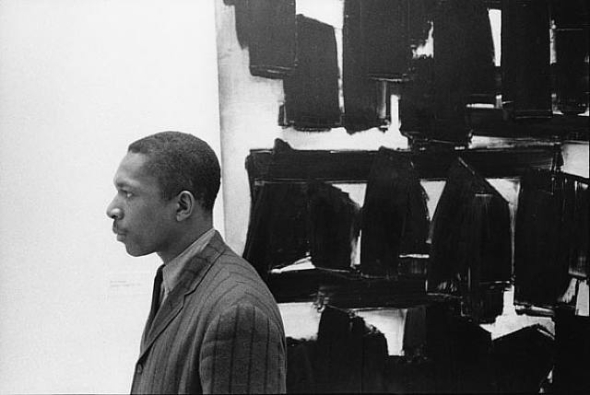
John Coltrane
‘I play pure emotion..In music, the only thang that matters is whether you feel it or not..Chords are just the name for sounds, which really need no names at all, as names are sometimes confusing..Blow what you feel – anything. Play the thought, the idea in your mind – Break away from the convention and stagnation – escape! [Musicians] have more room to express themselves with me…They should be free to play things as they feel it, the way it’s comfortable for them to play it. You can use any note and rhythm pattern that makes good sense for you. You just hear it – like beautiful thoughts – you don’t listen to people telling you how to play…My music doesn’t have any real time, no metric time. It has time, but not in the sense that you can time it. It’s more like breathing – a natural, freer time. People have forgotten how beautiful it is to be natural. Even in love…’
-ornette coleman, from The Harmolodic Manifesto [a musical application of socialism]
Even in love…the words settle softly but firmly within my mental. Of course the people are disconnected from any real feelings of what love in its natural state could look like. Feel like. We live within capitalism, which birthed racism and exploits patriarchy. It structures everything and socializes us in a culture that supports such structures; none of which are founded on love. In the states we are taught false bourgeois understandings of it. We are conditioned through bourgeois holidays to celebrate love and togetherness a few days out of the year, where we are assaulted with advertising pressure to consume and show love through our wallets and things. Things replace love and feelings. Natural does not occur, because we do not live within the settings of anything natural. We are so far removed from our own wants and desires; alienated from our bodies and spirits and each other. Alienated from the earth. The type of freedom ornette coleman speaks to in his manifesto above transcends the makings of music. For me, it means the necessity of revolution. Music, like all culture, is regulated through society. Music therefore represents the same rigidity and oppressive ideas that rule all realms of society, incarcerating us in a patriarchal/capitalist mental and physical slavery. Musicians, such as Ornette Coleman and John Coltrane chose to break jazz free from the western linear structure. They wanted collective/individual free expression; the connection of feelings and body with music; with sound. This type of connection is real freedom, but freedom does not exist under capitalism. Therefore our art is not completely free either. But we can use it to express these critical ideas. We can use it to express alternative visions in practice. John Coltrane expresses this idea musically here,
“I think the majority of musicians are interested in truth, you know—they’ve got to be because a musical thing is a truth. If you play and make a statement, a musical statement, and it’s a valid statement, that’s a truth right there in itself, you know. If you play something phony you know that’s phony. All musicians are striving to get as near perfection as they can get. That’s truth there, you know. So in order to play those kind of things, to play truth, you’ve got to live with as much truth as you possibly can, you know.”
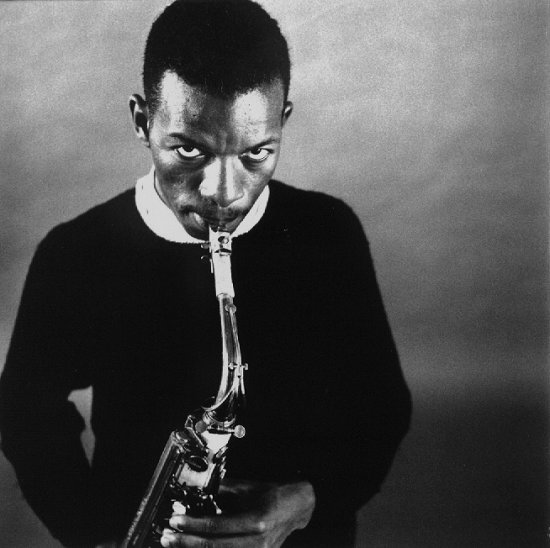
Ornette Coleman
I believe that revolutionaries feel very similarly. There is an understanding that our struggle is grounded in a righteous truth, liberation. All of our actions are being guided by that truth; the righteous revolutionary strives to embody truth as much as possible, despite the challenges of capitalism. This is what we must do if we stand a chance of moving towards a new age of freedom. This type of revolutionary thinking can be applied to the music and thought of musicians, such as Ornette Coleman and John Coltran. Coleman tried to develop his ideas around free jazz into a loose document called The Harmolodics Manifesto. It is underdeveloped theoretically, and some may argue that it is a joke that Coleman created to amuse himself. Either way, I see the potential in the ideas presented; there is a conscious analysis of music that can be applied to the overall structures of society and revolution. Coleman’s music and ideas are revolutionary, because they are dialectical. Dialectics is the understanding that society is developed and propelled forward through the relationship of contradictions, leading to ruptures and transformation. This was a fundamental change in western methods of consciousness, which relied on formal logic. Formal logic did not account for the real movement that makes up society, because it did not understand contradictions. Karl marx grounded dialectics within class struggle asserting that the fundamental contradiction of society is between the oppressed and the oppressors. It is the results of these struggles, which has catapulted us into new historical epochs, capitalism being our current one. Dialectics therefore is inherently revolutionary, because it is the conscious actions of people provide the basis for destroying and rebuilding society. The makings of history.
Ornette Coleman and John Coltranes development of free jazz is a musical application of dialectics in many ways. They used jazz to challenge the limitations of jazz giving birth to a new sound, and therefore a new idea. This is music, but it is all very social. That is why Coleman and Coltrane speak to the human feeling involved. They’re making musical emotion; providing sounds to the thoughts and feelings. They do not see a disconnection between them. This is a new concept that challenge’s the limitations imposed upon our collective consciousness through living in this capitalist system and learning exploitation on the job, within classrooms, and our communities. We have to consciously break free from this conditioning and strive for the truth behind the socialization. This is don through living, studying, creating and struggling. It is what has helped me stay awake in this system with hope and inspiration for my people. But the truth is we aren’t socialized to feel; to express our feelings naturally. We do not live naturally. We have no idea what that really means even. We buy meat in plastic and styrafoam, and frozen vegetables shipped from across the world. We live in little boxes removed from one other, laid down on pavement, which has been laid down on the beautiful earth. This keeps us spiritually weak so that we are more equipped to accept the misery of this absurd and abusive system. A people who are awake and in touch with their beautiful hearts and desires together is a powerful force; it stands oppose to the makings of the system. If we all begin to understand this truth and come together on the basis of this truth, then we can rebel against the system with the goal of taking it back and running it for ourselves. Then we will have revolution unfolding around us; materially and culturally, uplifting our spirits because of the strength of our spirits. Therefore, the most important revolutionary work we must be doing during and in between struggles is stimulating the conscious/spirits of the people. Inspiring them and supporting what they already know; what we all know birthed within us.
And art, like struggle, is, and has always been, an important vehicle for inspiring and transforming the people’s consciousness. Arts revolutionary effect on the people is twofold: it is both the production of revolutionary art, as well as consumption of it, which inspires and effects the people. Revolutionary art can deliver messages that inspire the people and make them move. It is also the act of making art and participating with others in the production of art, which can transform someone’s consciousness. There will be many a revolutionary who will diss art and its importance. Part of that is coming from a righteous feeling of seeing art fetishized in liberal ways that lose sight of the importance of revolution and taking power back. That said, art will save you. Capitalism is designed for so many to fail and suffer. It can be hard to find reasons for living, but art offers connection. Connection to ourselves and each other. Often people find art before they have been exposed to the idea of revolution. As a kid It was through art that I found emotional strength to survive my family trauma, and my ancestral trauma, the system being the ultimate source of it all. The more we value art in the revolutionary left the more we can guide people to a total understanding of the world. Our art can cast visions for action and that is what it must do.
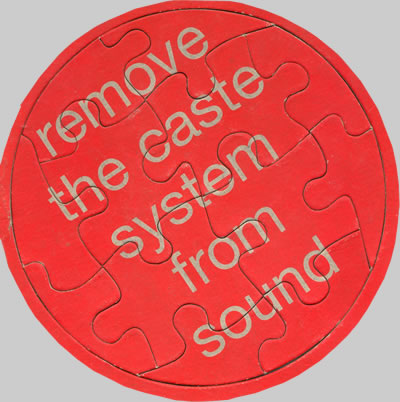
harmolodics
thoughts for my grandfather
Posted: December 16, 2012 Filed under: Poetic truths, Poetry 1 Comment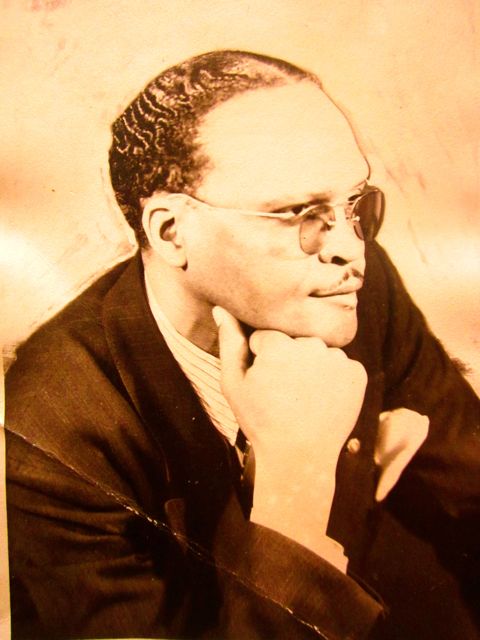
a very dapper Daddy Herman
I have never known the experience of having a grandfather in your life to learn from and spend time with. My father did not know his father and my mother was estranged from hers. However, my father’s grandfather, my great grandfather, has always carried such importance in my life. His name is Herman Walder, but we call him Daddy Herman. I never knew him but I know many things about him. He was a well-known and talented jazz musician in Kansas City, a family man, and a sharp dresser. His daughter, my grandmother, says that he used to say ‘sharp like a Harlem sissy’ in regards to his fashion. A lover of womyn and an ally to the queers. The truth is my grandfather was always down for a good time, and during the prohibition days good times were to be had at the underground jazz clubs, where musicians, queers, prostitutes, jazz lovers, and anyone looking for a party could be found. He was a charismatic person and an artist. Even though I never knew him I have been connected to him all my life. I guess it’s just something in the intuition; I feel his spirit in my own.
He has been gone for 28 years now. I’ve been thinking about him a lot today and it has felt good to meditate on his spirit, as well as my own. Been feeling preoccupied all weekend with thoughts…thoughts for my brothers who are so alienated in this world. Dehumanized as ‘criminals’. Disconnected from feelings. The legacy of our continual slavery. I think about the challenges I have experienced with trying to love my brothers. The disappointment and violence that sometimes greets this love. I think about humanizing them as I humanize myself, so that we can really embrace each other in our many selves. In honor of those feelings and my grandfather I wanted to include a poem by the fierce and important poet Wanda Coleman. Also known as the ‘LA blues woman’. Her words always radiate with truth and power.
Much love for the ancestors.
Holding the Sidewalk Down by wanda coleman
it is an american universal peculiar to certain black men
who hang out on street corners no matter where
making signals to one another
some mysterious juju/communication
worshipping the passing of a life
that excludes them
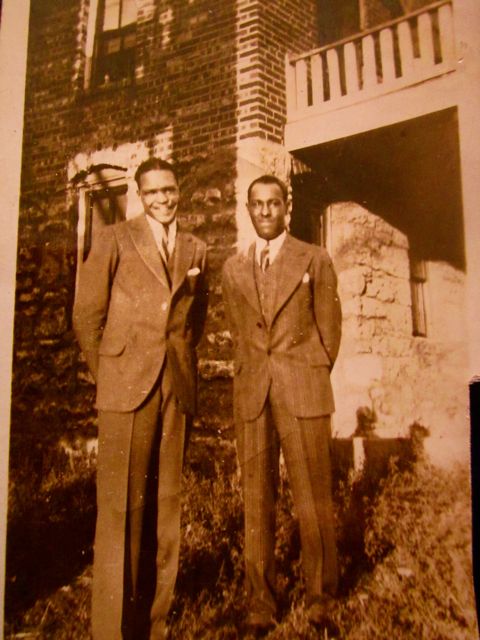
A young Daddy Herman to the left..holding the sidewalks down
slow gray mornings with yerba mate and myself are when i feel the most romantic
Posted: December 1, 2012 Filed under: Poetic truths, Poetry 3 Comments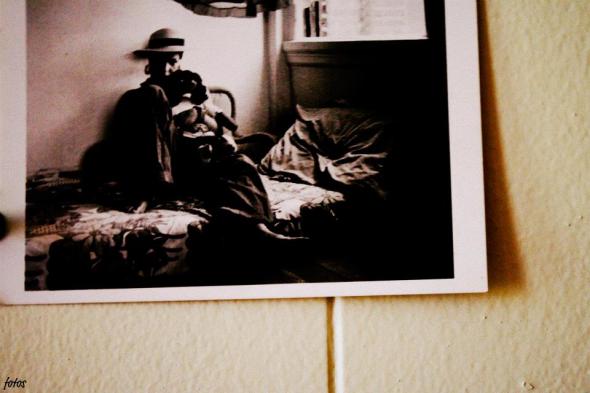
foto by my cosmic sister moon: http://fotosrevolutioninmotion.wordpress.com
There are moments when lovers reveal parts of themselves
never revealed before
and you are hit with the sudden realization
that things aren’t always as sweet as they seem
and those late night giggles that lead to late morning kisses
are replaced with long silences
and awkward goodbyes
There are times when lovers reveal parts of themselves
never revealed before
that release you from old habits
daydreams where security is found
and pedestals that don’t really exist
and the hard feelings of disappointment
sometimes carried
are gently unpacked from the truth gained from the release
and truth is sweet
as love first felt
 Kissing in the Dark...